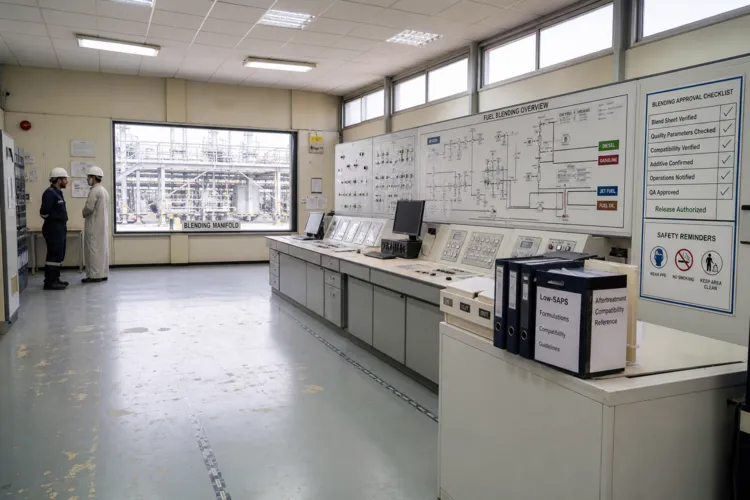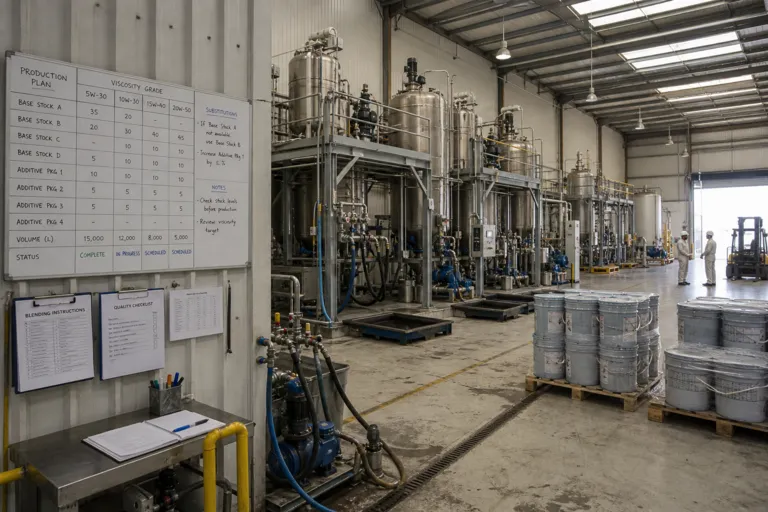
Group III scarcity in 2026 has not been a uniform “base oil shortage.” JobbersWorld described a sudden and severe tightening of API Group III supply during the spring 2026 price surge tied to the U.S.-Iran conflict and the closure of the Strait of Hormuz. Spot prices increased sharply, nearly doubling for some grades, while the spot market became effectively unavailable and allocations tightened. The practical implication for Gulf engine oils is decision pressure: blenders may have enough base stocks overall to keep vehicles operating, but not enough of the high-performance Group III (especially Group III+) needed for certain products, specifications, and market segments.
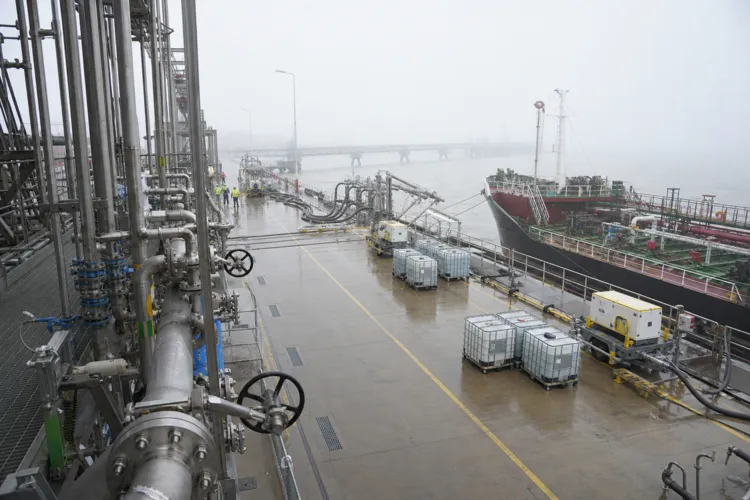
The supply-chain trigger matters in the Gulf because Hormuz is both a physical choke point and a producer corridor. Lubes’N’Greases reporting cited in MiddleEastLubricantsConsulting says the strait’s closing halted shipping traffic shortly after Feb. 28 and that three Gulf-area Group III producers account for 21% of global Group III production capacity, with exports normally traversing the strait. ICIS also reported that around 25% of global Group III capacity is constrained in the Middle East, and another ICIS update says Hormuz “holds hostage” almost one-third of Group III base oils supply. Those constraints can quickly flow into blender economics, especially when availability collapses into an “auction dynamic” for the remaining spot barrels.
When Group II+ Can Work—and When It Cannot
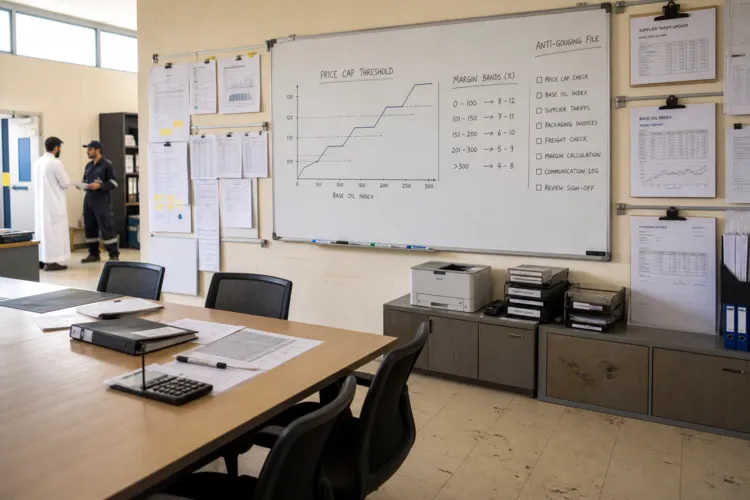
Substitution is portfolio-specific. JobbersWorld’s Stage-Gate Framework starts with a simple screen: many high-volume categories can be formulated with Group II or Group II+, including the majority of process oils, general industrial fluids, and 15W-40 HDEO. The harder call is passenger car motor oil, where risk concentrates “where dependency and volume intersect,” with 0W-20 PCMO named as the primary example. For products using Group III mainly for marketing claims (“full synthetic”), blending convenience, or marginal gains without a technical mandate, JobbersWorld argues blenders can reformulate or reposition using Group II+. That is the realistic lane for a Group II+ stopgap—where a label claim or convenience, not an approval requirement, is driving Group III use.
However, the same sources set clear limits. JobbersWorld notes that only products where Group III is required by industry specifications (including API SP, ILSAC GF-6/GF-7, and CK-4) or OEM approvals (including dexos®, DEXRON, and Mercon) belong in the “must protect” bucket. Argus reinforces the boundary from a compliance angle: when API activated emergency provisional licensing (EPL) for blenders following EOLCS, ILMA specified the relief would not allow blenders to substitute Group II/II+ grades into Group III blends. The EPL focused on varying Group III grades and brands, and market participants still questioned whether specifications could be met without additional testing.
Price and grade-specific tightness explain why this decision is urgent for low-viscosity Gulf engine oils. MiddleEastLubricantsConsulting, citing U.S.-focused reporting, described a constraint centered on Group III used in 0W-8, 0W-16, and 0W-20 oils, with Axios (May 15, 2026) putting the U.S. Group III supply gap at roughly 44% of normal capacity. JobbersWorld reported the Hormuz disruption cut Middle Eastern Group III exports to global markets by more than 70% between March and May 2026. In parallel, Lubes’N’Greases documented sharp spot increases between late February and mid-April, including Group III 4 cSt rising from around $1,125/t to $1,900/t in Asia and from $1,600/t to $2,350/t in Europe, while Group II 150 neutral rose from around $750/t to near $1,600/t in Asia and from $840/t to $1,880/t in Europe.
When does Group II+ substitution make sense in engine oil during Group III scarcity?
Which products face the most pressure when Group III is constrained?
Did API’s emergency provisional licensing allow Group II or Group II+ to replace Group III?
Why does the Strait of Hormuz matter for Group III supply affecting Gulf blenders?
What happened to Group III exports and prices during the 2026 disruption?