Sulphur and sulphuric acid have moved from background inputs to front-line risks. A Morgan Stanley note says sulphuric acid markets were already tight, so any disruption to sulphur supply can pose risks for key downstream users. That matters for lubricant blenders that buy ZDDP and EP packages through global channels, because those additive chains rely on dependable chemical inputs and stable logistics. When sulphur-linked markets tighten, it does not need to be a local refinery issue to become a local cost issue. In H1 2026, Shanghai Metals Market (SMM) described “unprecedented volatility” across the global sulphur industry chain, with rapid surge, peak, and correction dynamics that complicate budgeting and purchasing.
SMM tied the price shock to geopolitics and constrained shipping. It reported that on February 28 the US-Iran conflict broke out and the Strait of Hormuz entered a de facto blockade lasting over 100 days. The strait is described as carrying approximately 45% of global seaborne sulphur trade, while the Middle East accounts for roughly 25% of global sulphur production and 45% of global seaborne sulphur trade. SMM said shipping traffic through the strait plunged by 90%, with an estimated 800,000 to 1 million metric tons of sulphur cargoes accumulating in the Persian Gulf. Over the three-and-a-half-month war period, total sulphur shipments amounted to only 80,000 metric tons, creating a sharp supply shock for buyers exposed to seaborne flows.
What the Strait of Hormuz Shock Means for Additive Procurement
The repricing was broad, fast, and not limited to one market. SMM said domestic sulphur (SMM EXW Shandong Sulfur) rose approximately 157% in H1 2026, while the SMM China Copper Smelting Acid Index gained roughly 94%. Internationally, SMM reported SMM CIF Indonesia Sulfur surged over 126% and SMM CFR Indonesia Sulphuric Acid climbed about 185%. Other benchmarks also showed a steep lift: Silmaril Media reported S&P Global Platts assessed the FOB Middle East sulphur price at $695 to $700 per metric tonne in March 2026, up $200 per tonne from pre-conflict levels. For Middle East blenders managing a sulphur shortage affecting ZDDP additive supply, these figures describe the kind of input volatility that can show up as higher additive quotes and shorter validity periods.
Even after the ceasefire headlines, recovery signals remained uneven. SMM said the easing of supply concerns triggered an immediate sell-off, citing Zhenjiang Port granular sulphur falling from 11,750 yuan/mt on June 11 to 9,200 yuan/mt by June 24. But SMM also warned that, even in a best-case scenario, significant improvements in shipping volumes were unlikely before August, and it estimated 300,000 to 400,000 metric tons of sulphur remained stranded. It also reported that since the ceasefire announcement, about 640,000 metric tons departed the strait, compared with just 80,000 metric tons shipped during the entire war period. Separately, Morgan Stanley’s note cited regional stockpiles of 900 kt that were reportedly only likely to last a few weeks, reinforcing the idea that buffers can be thin.
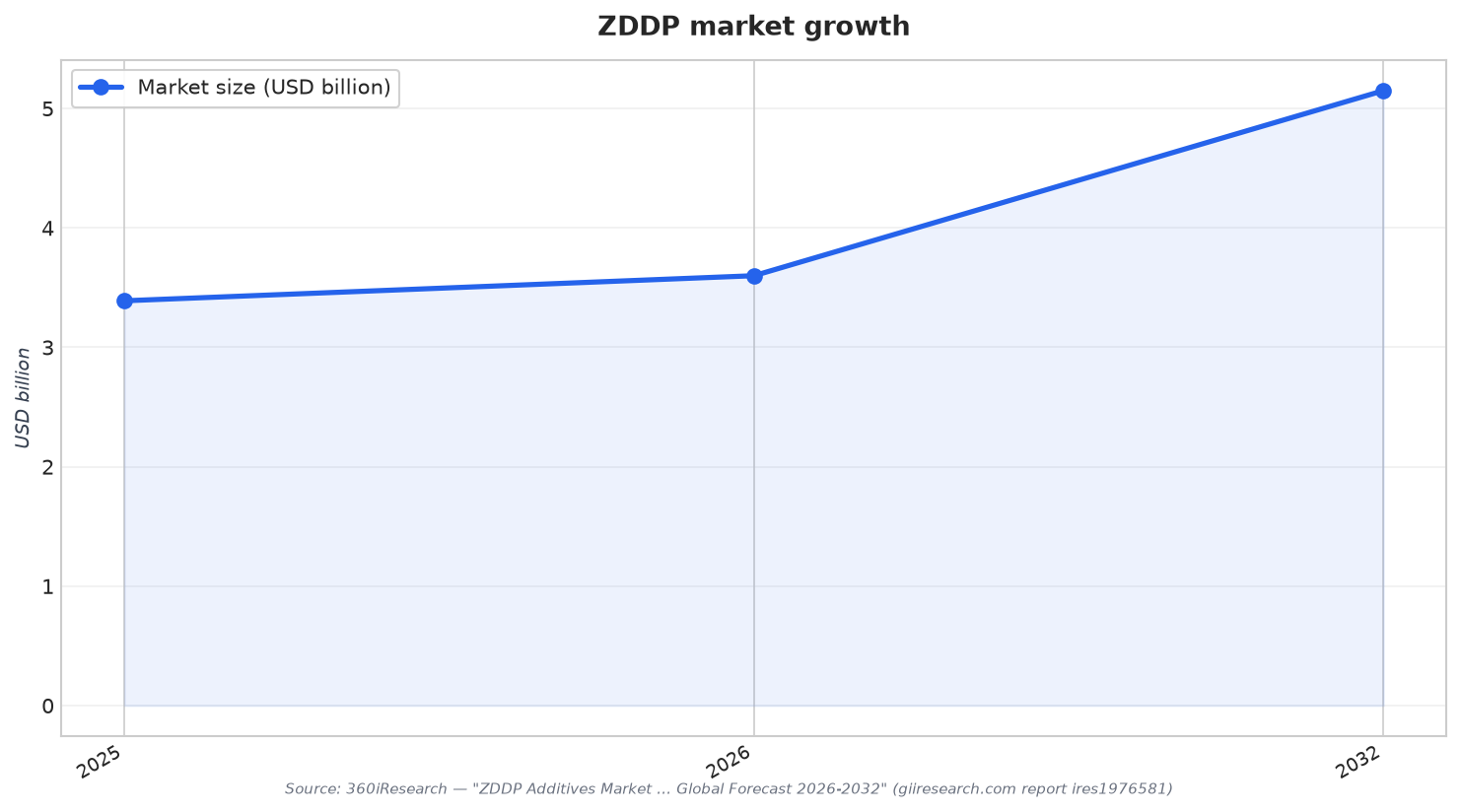
This chemical squeeze is unfolding at the same time the ZDDP market remains commercially significant. 360iResearch valued the global ZDDP additives market at USD 3.39 billion in 2025 and projected it would grow to USD 3.60 billion in 2026, with a CAGR of 6.13%, reaching USD 5.15 billion by 2032. In that context, Middle East blenders face a two-layer challenge: volatile sulphur and acid pricing on one side, and a growing additive market on the other that can amplify competition for qualified supply. Practical responses focus on procurement discipline and supplier engagement. The same 360iResearch outlook highlights supply chain evolution and material availability as risk vectors, which aligns with what H1 2026 sulphur disruptions demonstrated in real time.
What triggered the 2026 sulphur and sulphuric acid volatility described in the sources?
What price moves were reported for sulphur and sulphuric acid in H1 2026?
How does the sulphur shortage affecting ZDDP additive supply show up for Middle East blenders?
What did the sources say about stranded cargoes and the pace of recovery?
How large is the global ZDDP additives market, according to the sources?