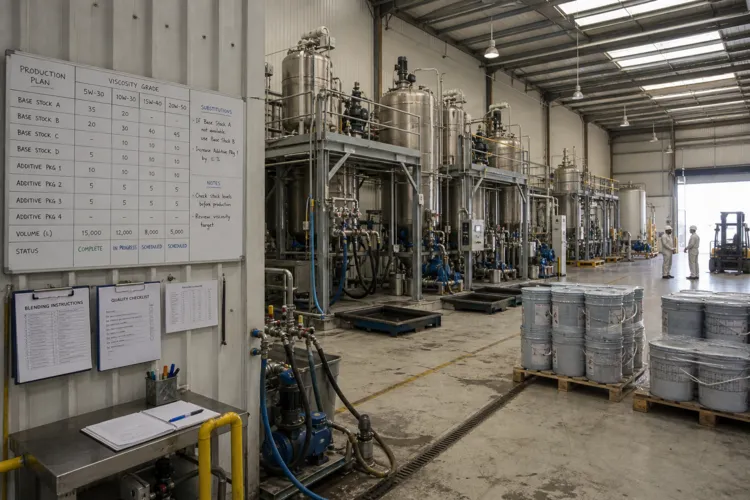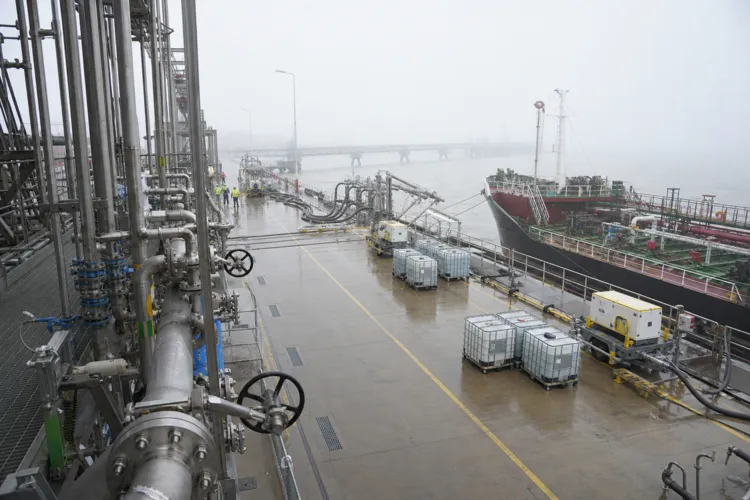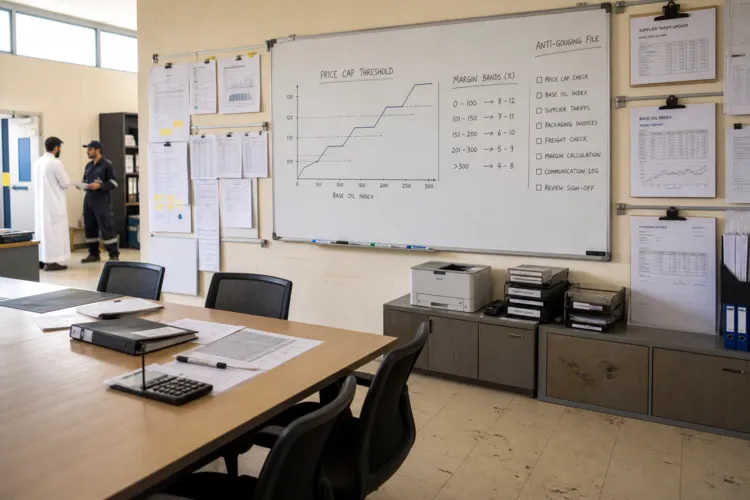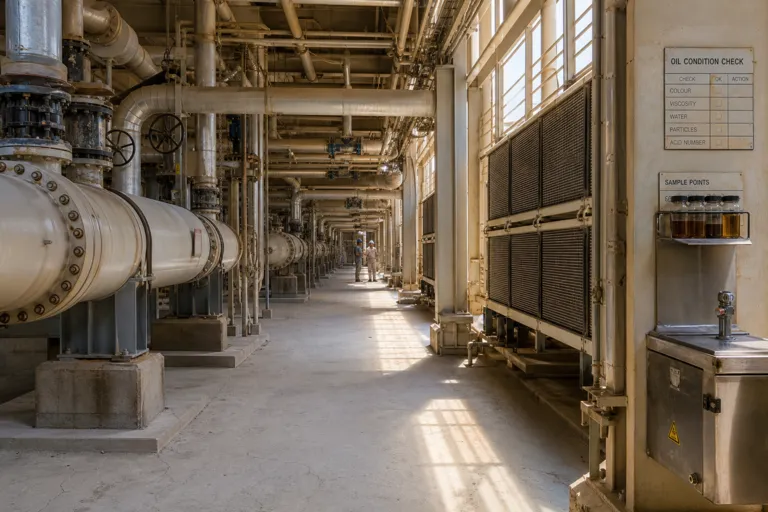
When operators talk about holding the base number, they are really talking about protecting performance under harsher thermal and operational stress. In the Gulf, the context is clear in adjacent equipment categories built to manage heat: GCC maritime and offshore activity relies on systems designed for continuous operation. IndexBox describes heat exchangers on vessels and offshore installations as critical for engine cooling and for lubricant temperature control, across newbuild and aftermarket channels. That combination—continuous operation plus systems explicitly tasked with lubricant temperature control—sets up the practical challenge behind engine oil TBN retention in extreme heat across the GCC: specifications must assume sustained thermal load rather than intermittent, mild service.
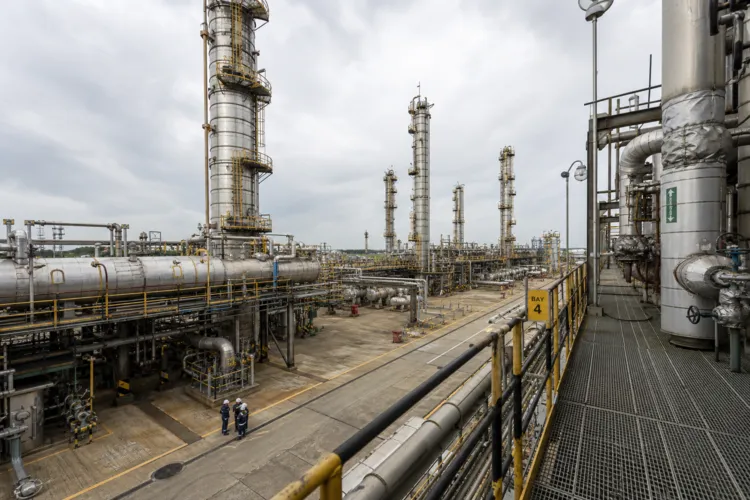
It also helps to look at how broad the GCC’s heat-management footprint is beyond marine. IndexBox frames the GCC heat exchangers market as anchored by decades of investment in oil extraction, gas processing, and refining, where heat exchangers are ubiquitous across core processes and maintenance cycles. The same report links future demand to national visions such as Saudi Arabia’s Vision 2030 and the UAE’s diversification plans, which expand industrial activity into areas like petrochemicals, power generation, and desalination. In other words, more assets operate in environments where heat must be moved, controlled, and recovered—an operational backdrop that should influence how lubrication programs set drain targets and how they write oil performance requirements.
Specify Around Heat: Put Thermal Control and Compliance in the Same Requirement
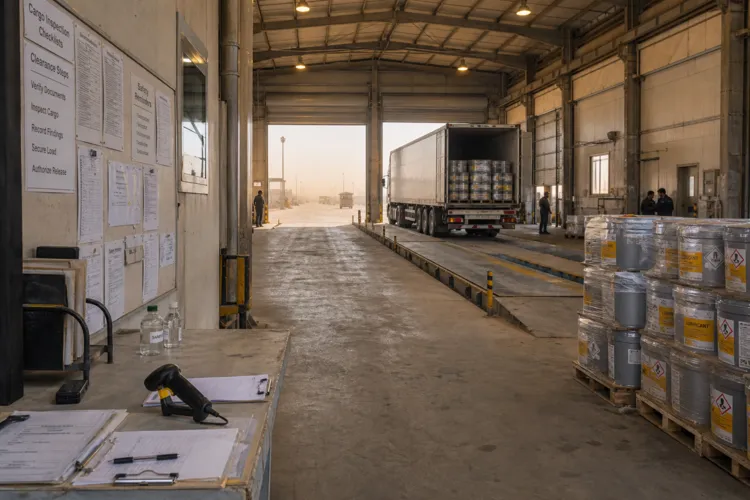
One practical way to specify around heat-heavy duty cycles is to align lubrication requirements with the facility’s heat-control approach and its compliance reality. Mobility Foresights projects the GCC industrial heaters market to grow from USD 3.8 billion in 2025 to USD 6.5 billion by 2032, at a CAGR of 8.0%. The same source notes that certification and compliance processes add time and cost to procurement and maintenance, and that changes in area classification can require full heater system replacement. For procurement teams, this means oil specifications should not be written in isolation. They should sit beside requirements for heat control, maintenance windows, and documentation, so that oil selection, heater/heat-exchanger upkeep, and compliance-driven downtime planning reinforce each other.
The market signals also suggest that buyers increasingly value performance features that support control and monitoring. Mobility Foresights points to a growing preference for energy-efficient electric and infrared heating systems over conventional fossil-fuel-based heaters, and mentions smart controller integration for IoT-enabled process heating offerings in GCC use cases. Without claiming oil test numbers that are not in the sources, the specification implication is straightforward: if a site is modernizing heat control and instrumentation, lubrication specifications should be written to work with that operating model. Build requirements that match how assets are run—continuously, with tight temperature control goals and planned turnarounds—so the organization is not surprised by faster depletion behaviors under sustained heat exposure.
Finally, treat “extreme heat” as a system problem, not only an oil problem. IndexBox’s marine report emphasizes heat exchangers as essential thermal management systems for offshore platforms and vessels, explicitly including lubricant temperature control as an application. IndexBox’s broader GCC heat-exchangers view ties demand to maintenance, turnaround activities, and capacity expansion in the hydrocarbon value chain, plus diversification projects. Taken together, these sources support a practical procurement message: write lubrication specs that assume high utilization and that coordinate with thermal hardware upkeep. That is the real route to protecting engine oil TBN retention under extreme heat in GCC-style operations—by specifying around the total duty cycle and the thermal-management stack that actually governs it.
Why does extreme heat in GCC-style operations raise concerns about engine oil base-number retention?
What GCC market signals support tighter thermal-management specifications alongside lubrication programs?
How should buyers specify around compliance and maintenance constraints tied to high-heat equipment?
What role do heat exchangers play in lubrication-related temperature control in the GCC marine and offshore context?