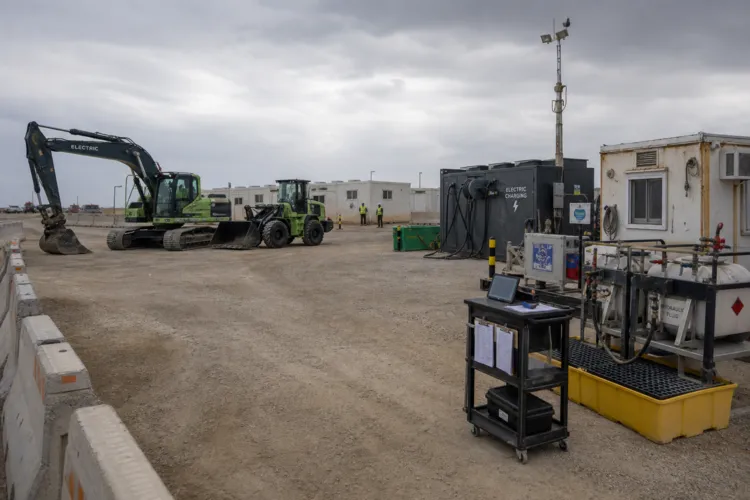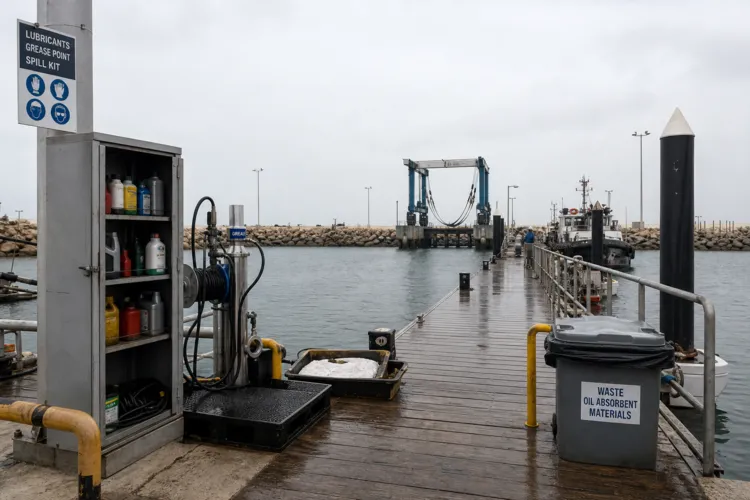

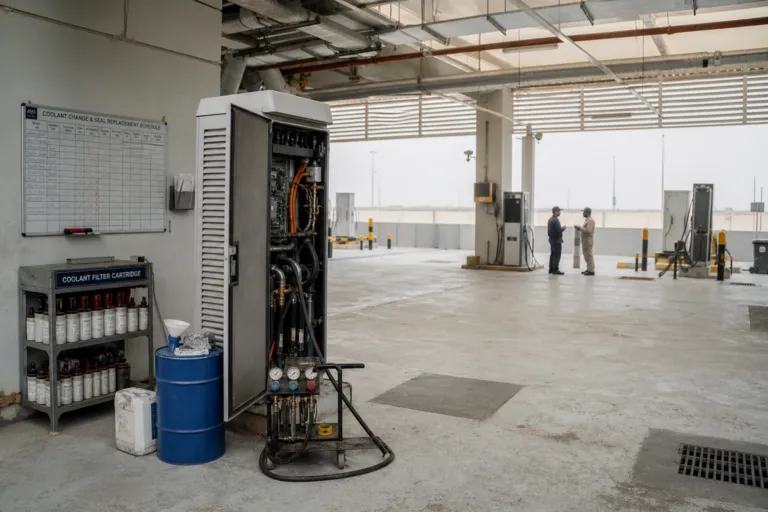
The Gulf’s EV charging build-out is moving from early adoption to scaled infrastructure. Mordor Intelligence estimates the GCC Electric Vehicle Charging Infrastructure market reached USD 2.16 billion in 2025 and is on track to reach USD 6.56 billion by 2030, advancing at a 24.83% CAGR during 2025–2030. The mix also matters for heat management. In 2024, public charging held a 71.14% share, and it is projected to expand at a 37.08% CAGR between 2025 and 2030. Public sites, especially along corridors and high-traffic hubs, push chargers into repeated, high-use cycles where keeping equipment cool becomes a daily operational priority.
Within that expansion, DC equipment is the growth engine tied most directly to thermal load. Mordor Intelligence forecasts DC stations in the GCC to grow at a 42.23% CAGR, even as AC stations held 55.19% share in 2024. MRFR also frames DC fast chargers as the dominant segment because of their high-power charging capability and their fit for commercial and public charging stations. As networks shift from home charging toward publicly accessible, utility-run models, and as connected stations grow (37.89% of installations in 2024, rising at a 44.36% CAGR), operators have more reason to standardize maintenance. That is where EV charging station cooling fluid GCC discussions move from engineering detail to procurement line item.
Why Liquids and Consumables Are Becoming the Aftermarket Story
IndexBox highlights a specific monetization path for liquid-cooled charger modules: recurring sales of consumables such as coolant fluids, seals, and filters, plus replacement modules. It also notes market pull for coolant fluids with longer lifespan of 5–10 years to reduce maintenance frequency. This is not only a component sale; it is an operations model. IndexBox points to service contracts and upgrade kits aimed at early-generation chargers, including coolant replacement and module upgrades. It also flags supply-side friction: supplier qualification lead times of 12–18 months for high-reliability cooling modules can create bottlenecks, while input cost volatility in copper, aluminum, and specialty coolant fluids can swing module material costs by 15–25% year-on-year.
Liquid cooling is also expanding beyond modules into the user-facing cable set that must handle high current without overheating. MarketsandMarkets projects the global liquid cooled EV charging cable market to grow from USD 0.51 billion in 2025 to USD 1.28 billion by 2032, at a 14.0% CAGR. The same source positions China as a major driver, noting approximately 30% of new DC chargers there are ultrafast, and describes liquid-cooled cables as a way to circulate coolant through the cable to manage heat generated during high-current charging. For GCC planners, these figures are global context, not local demand proof. Still, they show how cooling fluids can become embedded across multiple charger subsystems, widening the addressable aftermarket from “parts” to “consumables plus uptime.”
Country-level rollout momentum can further concentrate the opportunity. Mordor Intelligence reports Saudi Arabia led with 63.22% of GCC market share in 2024, while Qatar is the fastest-growing country at a 52.14% CAGR to 2030. NextMSC adds a wider regional frame, estimating the Middle East EV charging market will create an absolute dollar opportunity of USD 3,380.0 million between 2026 and 2035, with growth anchored in expanding public DC fast-charging rollouts and intercity highway corridors. As these networks scale, cooling-fluid programs can be packaged into standardized maintenance plans, tied to service contracts, and aligned with the reliability needs of public operators managing heavy utilization and roaming-ready, connected stations.
Why is cooling becoming a bigger issue for DC fast chargers in the GCC?
What is the consumables opportunity around EV charging station cooling fluid in GCC infrastructure?
How do service contracts connect to charger cooling systems?
What global signals suggest liquid-cooled charging components are scaling?
Which GCC markets lead the charging infrastructure build-out discussed in the sources?