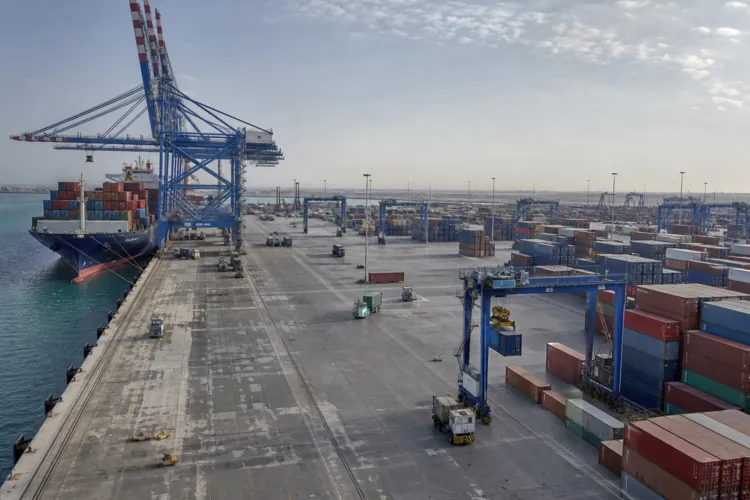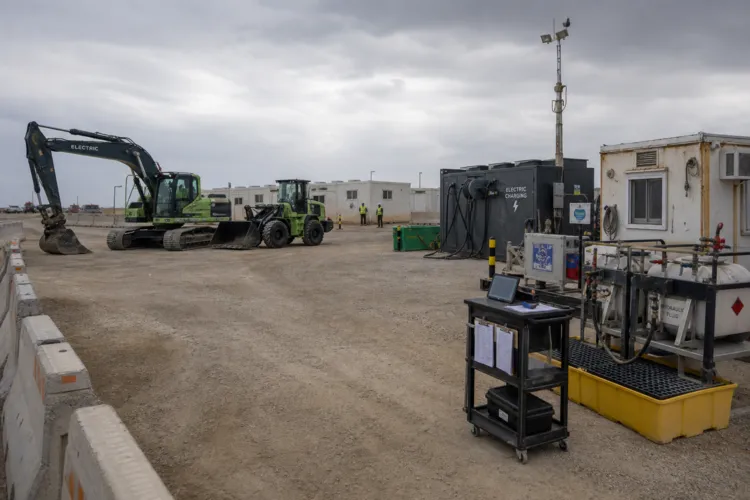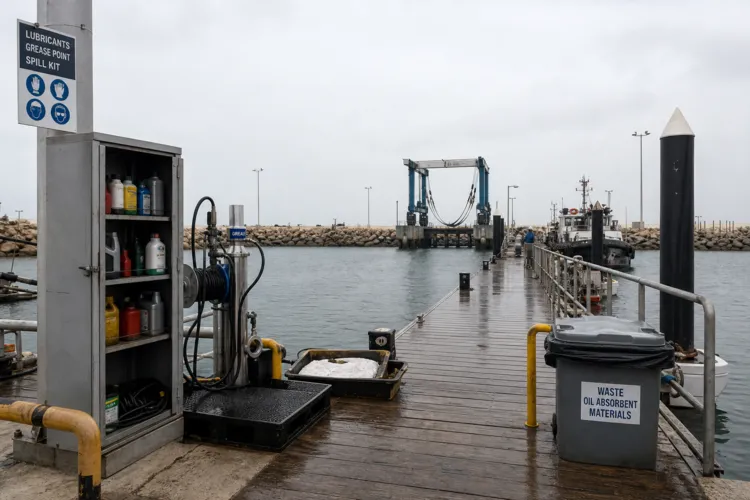

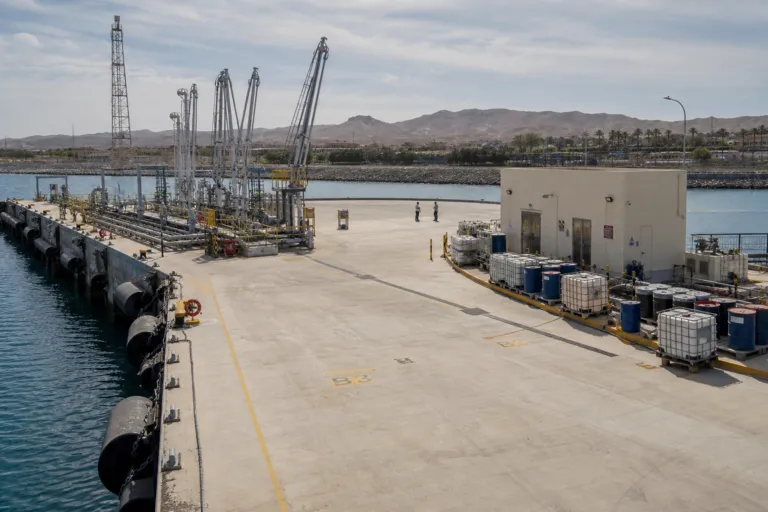
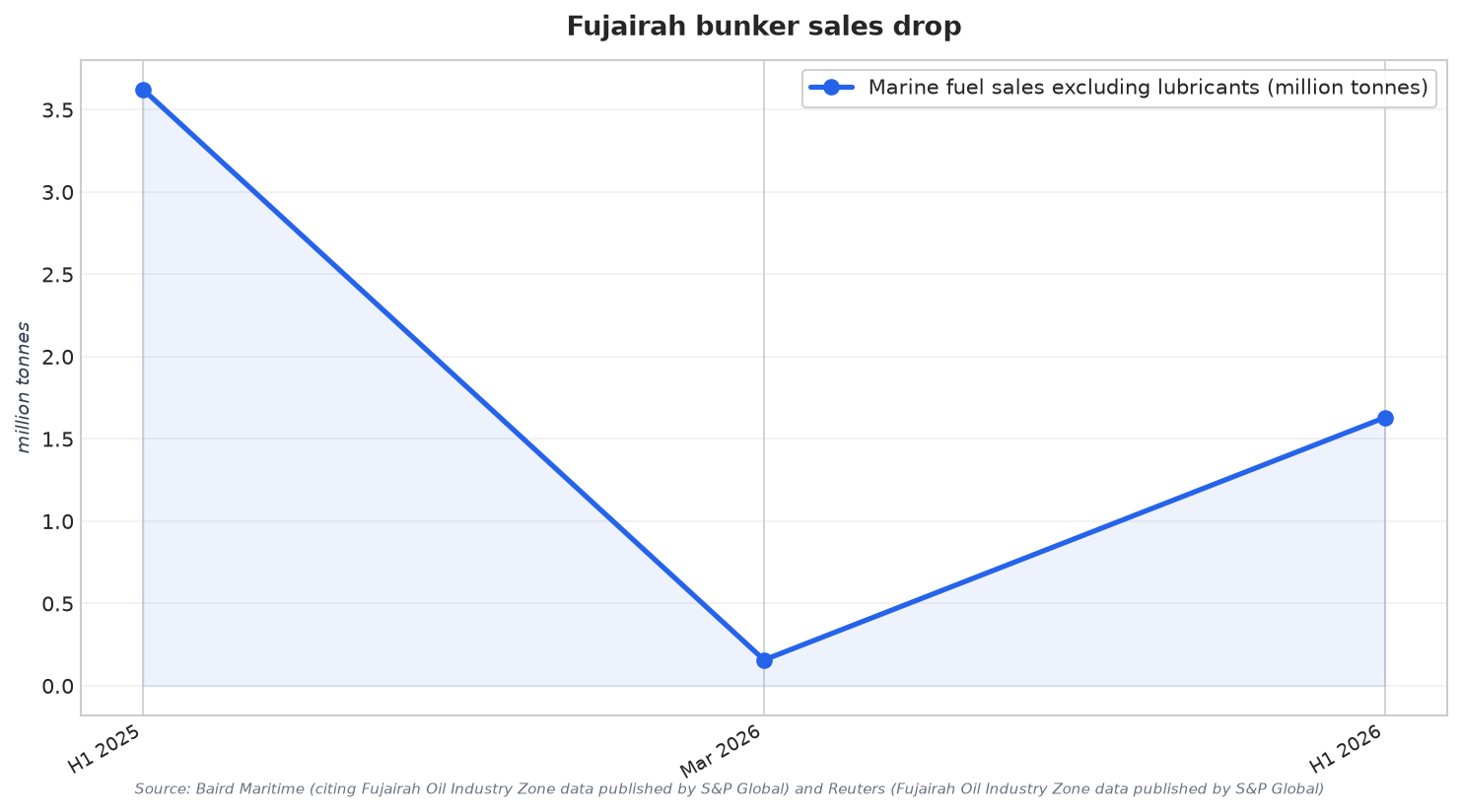
Fujairah’s role as a major Middle Eastern refuelling hub is under pressure in 2026, and the squeeze is measurable. Marine fuel sales at Fujairah in the first half of 2026 (excluding lubricants) totalled about 1.63 million tonnes (10.4 million barrels), down 55% from the first half of 2025, according to Fujairah Oil Industry Zone data published by S&P Global. Monthly volumes extended the decline, with June at about 86,000 tonnes. Reuters also reported March bunker sales of 158,852 cubic metres (about 157,300 metric tons), the lowest on record in data available since 2021, and more than 70% down from February and the same month a year earlier. Those figures describe fuel, not lube, but lubricant suppliers depend on port calls and bunkering-linked vessel stops.
The operational drivers matter for lubricant sellers because they disrupt both demand patterns and the ability to serve ships safely and consistently. Reuters said some oil loading operations in Fujairah were partially halted in March after infrastructure attacks, and trade sources said ships also avoided the port due to risks linked to taking bunkers there. AGBI quoted Argus Media’s Elshan Aliyev saying two bunker fuel types—high-sulphur fuel oil (HSFO) and marine gas oil (MGO)—were in “short supply” at Fujairah, while very low-sulphur fuel oil (VLSFO) “appears to be available,” though in smaller volumes than normal. When fuel availability and vessel routing become unstable, marine lubricant demand can become harder to predict by grade, timing, and location.
What Falling Bunker Volumes Signal for Lubricant Supply Chains
For 2026, the clearest commercial signal is fewer “natural” touchpoints to sell and deliver. Bunker sales exclude lubricants in the reported datasets, yet the same port call that prompts a fuel stem often triggers lubricant top-ups, cylinder oil adjustments, and technical service visits. Baird Maritime reported sales first crashed in March after war broke out at the end of February, with the waterway effectively shutting and attacks hampering loading operations. It also noted Fujairah typically imports fuel oil cargoes from Middle Eastern exporters such as Iran and from Russia, with supplies usually exiting via the Strait of Hormuz, while Russian fuel oil supplies declined month-on-month into 2026 after infrastructure attacks on refineries. If supply streams are uncertain, lube suppliers face similar uncertainty in replenishment timing and last-mile delivery scheduling.
Product-mix volatility can also spill over into lubrication requirements. In June at Fujairah, low-sulphur marine fuels (residual and gasoil fuels) made up 51% of volumes, while high-sulphur marine fuel comprised 49%, according to Baird Maritime citing Fujairah Oil Industry Zone data. Separately, AGBI’s reporting highlights stress on HSFO and MGO supply, even as VLSFO remains available but constrained versus normal. Lubricant suppliers may need to plan for rapid changes in which vessel segments are calling and what engines are running on, while keeping service continuity for ships that still bunker despite risk. That is the practical core of the Fujairah marine lubricants supply disruption: unpredictable port activity can create both sudden demand gaps and short-notice delivery requests.
In this environment, inventory signals can swing quickly and complicate procurement decisions. Baird Maritime said residual fuel oil inventories at Fujairah rebounded to above 7.3 million barrels (1.2 million tonnes) in the week to July 6, the highest since early March, though stockpiles eased slightly again the following week. Discovery Alert, referencing the same broader episode, reported heavy fuel oil inventories declining to a record low of 3.91 million barrels during the week of April 13, 2026. For lubricant suppliers planning 2026 operations, the lesson is not that lubes track fuel one-for-one, but that fast inventory changes reflect stop-start operations and shifting flows. Add in Reuters’ note that some refuelling demand diverted to other regions such as Asia, with Singapore logging stronger volumes in the first two weeks of the war, and it becomes clear why lubricant networks may need more flexible regional coverage.
How severe was Fujairah’s bunker volume drop in 2026?
What caused ships to avoid Fujairah during the 2026 disruption?
Which bunker fuel grades were reported tight at Fujairah?
What does the Fujairah marine lubricants supply disruption mean for suppliers in 2026?
Did demand divert away from Fujairah to other regions?