
The Lebanon lubricants market sits inside a macro story defined by crisis, stabilization, and persistent shocks. Lebanon has been in a “large-scale multi-dimensional crisis” since 2019, including a banking collapse, a liquidity crisis, and a sovereign default, according to Wikipedia’s economy profile. That context matters for lubricants because it influences how importers finance stock, how distributors price in local currency, and how end-users time purchases. Wikipedia also notes nominal GDP was estimated at USD 26 billion in 2024, with per capita GDP at USD 4,473. After the economy shrank by 53.4% between 2019 and 2021, even a modest recovery can feel meaningful, but the baseline is fragile.
For pricing and contracts, the key operational variable is exchange rate stability. The World Bank states that exchange rate stability has held since August 2023, supported by improved tax compliance and prudent fiscal management. That does not remove risk, but it changes the playbook: businesses can structure shorter quotation windows, tighten credit terms, and reduce “emergency” buffer pricing that often follows disorderly currency moves. The same World Bank update says real GDP expanded by 3.5% in 2025, reflecting early signs of macro stabilization and a rebound in tourism, alongside crucial but uneven reform progress. For lubricant demand, that combination can support steadier consumption planning, especially where fleets, workshops, and industrial buyers need predictable replenishment.
Where Currency Risk Meets Informal Trade Pressure
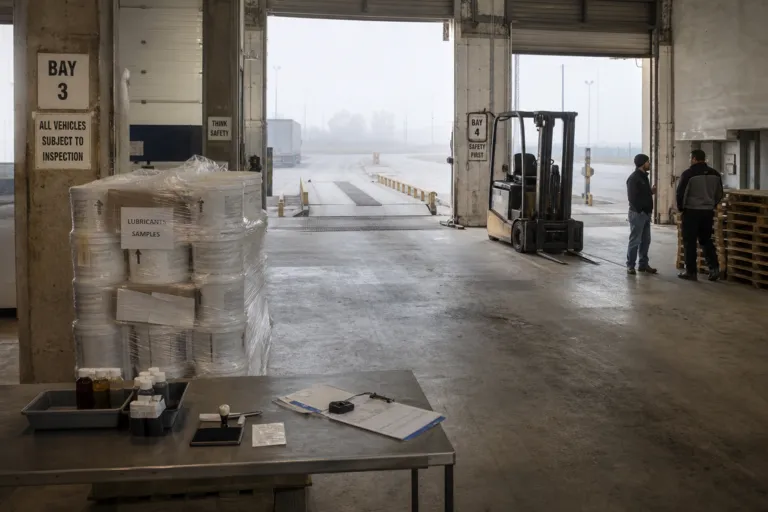
Even with improved stability, currency risk is still intertwined with border frictions and informal trade. CEIC’s description of the World Bank Doing Business methodology highlights an important nuance for logistics costs: “insurance cost and informal payments for which no receipt is issued are excluded” from the recorded costs for border and documentary compliance. For lubricants, that matters because management teams may see a gap between official cost assumptions and real-world landed-cost outcomes, especially when shipments face inspections, documentation burdens, or unpriced delays. The same CEIC text notes contributors convert local currency into USD based on the exchange rate on the day they answer the questionnaire, emphasizing how quickly financial assumptions can shift in volatile environments.
Demand signals and planning also depend on how Lebanon’s near-term outlook evolves. Fitch Solutions says it holds a “cautiously optimistic” outlook for 2026 and 2027, despite an expected economic contraction in 2026 with conditions set to improve in 2027. Fitch also forecasts the real economy will contract by 4.7% in 2026 and expects average inflation to accelerate from 14.6% in 2025 to 20.0% in 2026, citing higher fuel and imported costs. For an import-sensitive category such as lubricants, these figures imply that procurement cycles, working capital, and retail price discipline remain central, even when macro stabilization appears to be progressing.
In practical terms, a recovery narrative does not eliminate channel risk; it reframes it. The World Bank stresses that remittances and tourism remain critical growth drivers, but warns that delays on critical reforms and regional instability threaten the fragile recovery. Fitch similarly points to implementation obstacles and re-escalation risks tied to regional tensions. For lubricant brand owners and distributors, the implication is to build flexibility into route-to-market choices, keep compliance documentation tight, and stress-test inventory plans against disruption. At the same time, the World Bank’s note of exchange rate stability since August 2023 offers a foundation for more disciplined pricing frameworks, provided companies keep monitoring the gap between formal costs and the realities of informal trade.
What is shaping demand in Lebanon’s lubricants market during the recovery?
Has Lebanon’s exchange rate stabilized enough to reduce pricing volatility?
Why is informal trade hard to quantify in cross-border costs?
What macro risks could still disrupt lubricant imports and pricing?