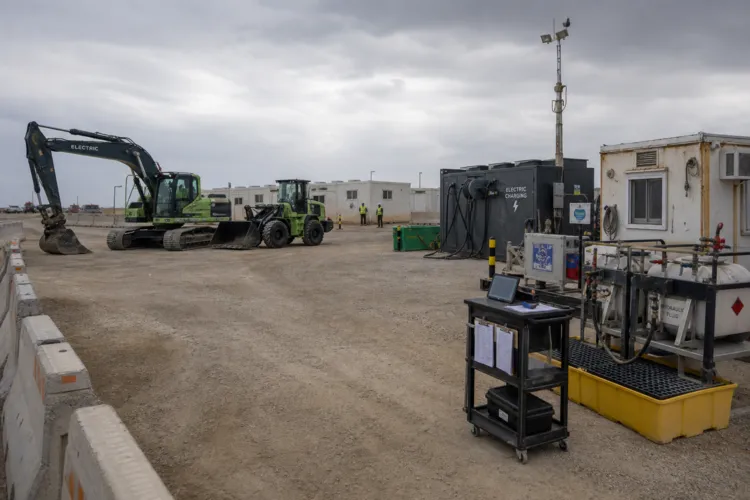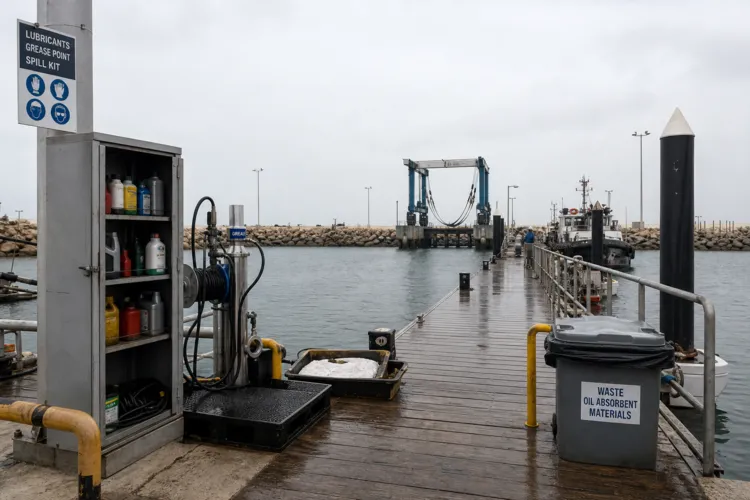

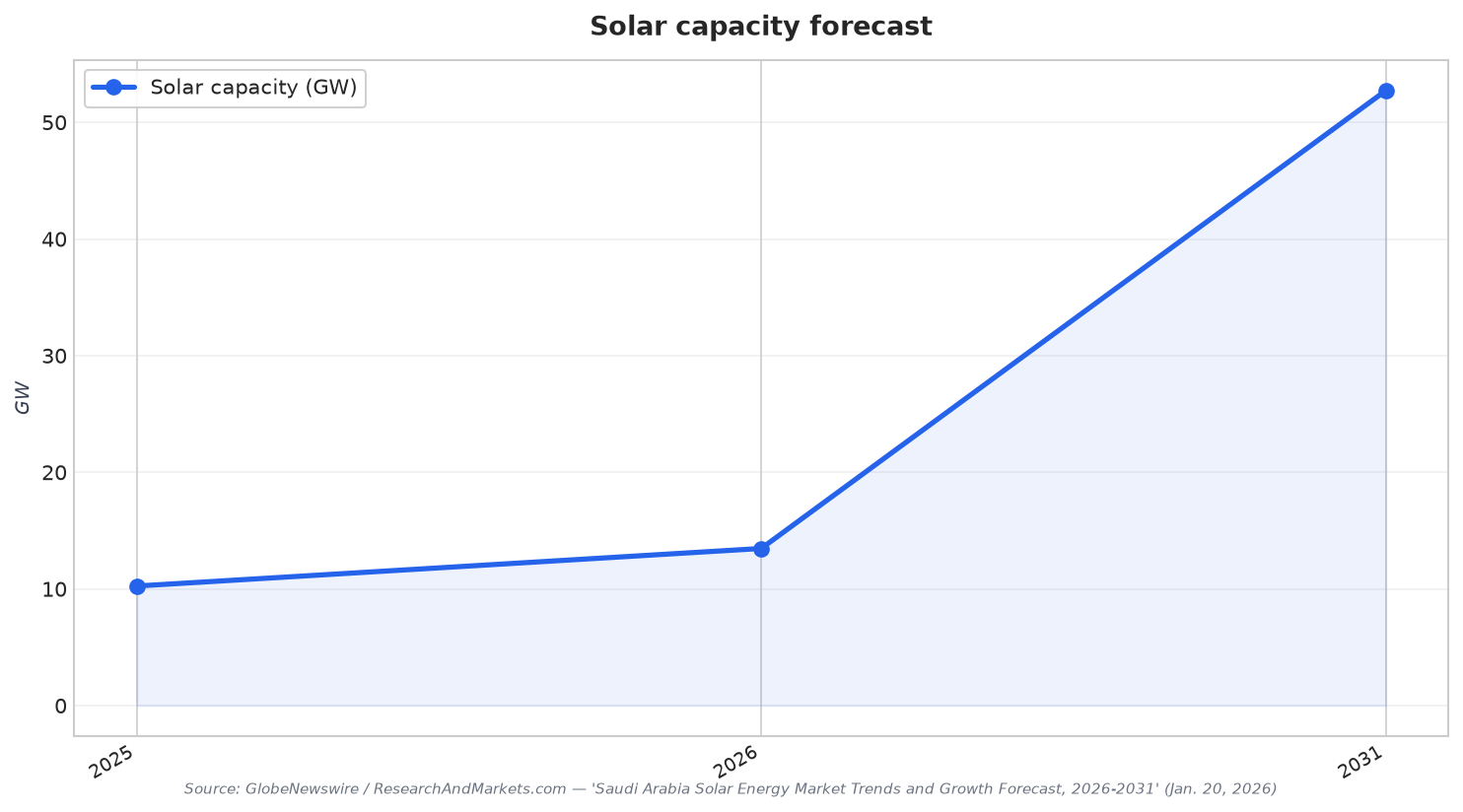
Saudi Arabia’s solar market is expanding fast, and that matters for what happens after panels are installed. IMARC Group estimates the Saudi Arabia solar energy market reached USD 8.3 billion in 2025 and projects it could reach USD 145.4 billion by 2034, with a CAGR of 37.39% during 2026–2034. Another outlook projects the Saudi Arabia solar energy market at 10.25 GW in 2025, rising to 13.47 GW in 2026 and reaching 52.72 GW by 2031, implying a CAGR of 31.40% from 2026 to 2031. As these systems scale, operations and maintenance becomes a larger, ongoing footprint, and lubrication is part of that reality.
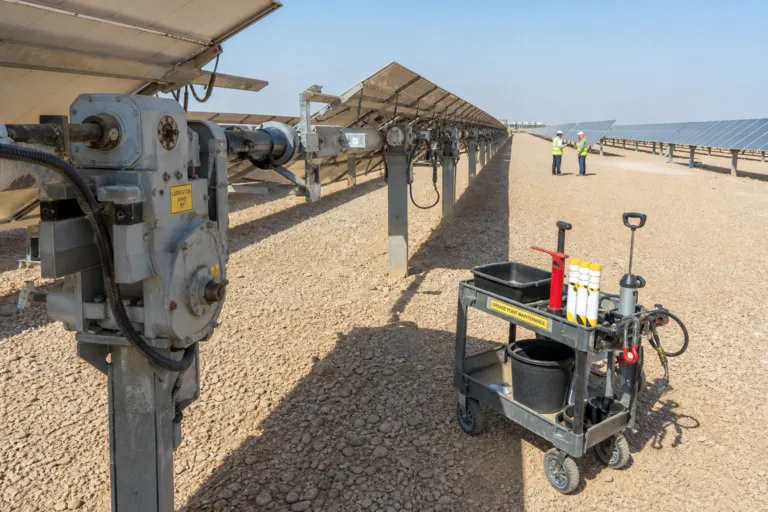
In utility-scale PV, the equipment mix helps explain why lubrication demand can track solar buildout. IndexBox describes Saudi Arabia’s solar equipment market as utility-scale-dominated, with projects larger than 5 MW accounting for roughly 70–80% of annual installed capacity. The same source lists mounting and tracking systems as core PV equipment alongside modules, inverters, and balance-of-system hardware. It also expects increased use of bifacial-optimized trackers and self-cleaning mechanisms to combat soiling. The more systems that move, pivot, or cycle through mechanical duty, the more site owners standardize maintenance routines around fluids and greases to keep uptime high across large project portfolios.
Why Trackers and Site Pumps Pull Lubricants Into Solar O&M
When readers search for solar farm lubricants Saudi Arabia, they are often trying to connect the dots between headline solar growth and day-to-day asset care. The solar equipment pipeline itself is expanding. IndexBox projects the Saudi Arabia solar equipment market could grow from about USD 3.5–4.5 billion in 2026 to USD 10–14 billion by 2035. It also states module assembly capacity is estimated at 3–5 GW in 2026 and expected to reach 10–15 GW by 2030, while polysilicon, wafers, and solar cells are entirely imported as of 2026. As procurement and construction scale, the installed base of mechanical subsystems grows too, which can increase recurring demand for industrial lubricants used in equipment servicing.
This solar-driven maintenance pull sits inside a broader national lubricants market with its own momentum. A lubricants market outlook states Saudi Arabia’s lubricants market size reached USD 1,352.4 million in 2025 and is expected to reach USD 1,717.4 million by 2034, at a CAGR of 2.69% during 2026–2034. The same source says national consumption exceeds 515 million litres annually and that the automotive segment accounts for roughly 60% of total lubricant demand. It also links rising industrial activity and infrastructure development to greater use of hydraulic fluids, gear oils, and industrial greases. Solar’s utility-scale buildout fits this pattern by adding more industrial assets that require consistent, process-driven maintenance.
Government initiatives remain a central backdrop for the project pipeline that ultimately drives operations needs. IMARC Group describes solar energy as one of the main renewable sources in the Vision 2030 plan and notes authorities are setting standards and guidelines for project development, alongside incentives such as tax breaks, financial subsidies, and advantageous tariffs. It also cites that the Public Investment Fund announced three agreements on July 16, 2024 to localize manufacturing and assembly of solar and wind generating equipment and components, through its wholly owned Renewable Energy Localization subsidiary (RELC). In parallel, IMARC Group notes ACWA Power obtained a US$ 2.30 billion loan on February 14, 2024 for three solar projects in central and northern Saudi Arabia: Ar Raas 2, Saad 2, and Al Kahfah. As projects move from financing to long-term operation, lubrication becomes a small but steady line item that scales with the fleet.
How fast is Saudi Arabia’s solar market projected to grow?
Why do trackers matter when thinking about lubricant demand at PV sites?
What share of Saudi Arabia’s new solar capacity is utility-scale?
How large is the Saudi Arabia lubricants market in recent estimates?
What’s the practical takeaway for solar farm lubricants in Saudi Arabia?