
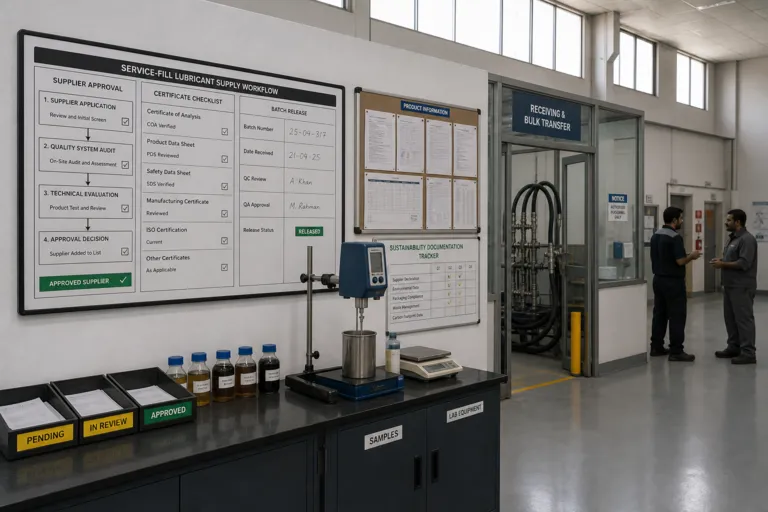
Winning OEM service-fill contracts in the GCC is becoming less about brand visibility and more about hard compliance and operational execution. GCC service bays are seeing synthetic lubricant formulations consolidate share against mineral-based alternatives, which tightens margin structures for traditional operators and forces suppliers to compete on performance and reliability rather than price alone. In this environment, lubrication services are defined by scheduled replacement and replenishment of fluids across powertrains, drivelines, and thermal management systems, tied to SAE viscosity grades and OEM-specified service intervals measured in kilometers or engine hours. Engine oil changes generate the highest transaction frequency and customer touchpoint density, making the engine-oil portion of any OEM-aligned service-fill program a high-stakes volume and reputational battleground.
Compliance is now a deal gate. In the GCC, GSO technical regulations and UAE-specific Emirates Authority for Standardization and Metrology (ESMA) specifications mandate lubricant performance certifications that filter market access for uncertified service providers. In Saudi Arabia, Saudi Standards, Metrology and Quality Organization (SASO) enforcement of API SP and ILSAC GF-6 standards is accelerating equipment upgrades at independent workshops. For lubricant suppliers bidding into OEM-linked service networks, that means contracts increasingly favor partners that can document certified products and support workshops through the practical shift to higher-performance synthetics. MarkWide Research also notes fleet operators across Saudi Arabia and the UAE are compressing lubrication service intervals as GSO sulfur emission caps tighten, which raises the bar for diagnostic capability and technician training for synthetic formulation handling.
What Procurement Teams Now Evaluate Beyond Price
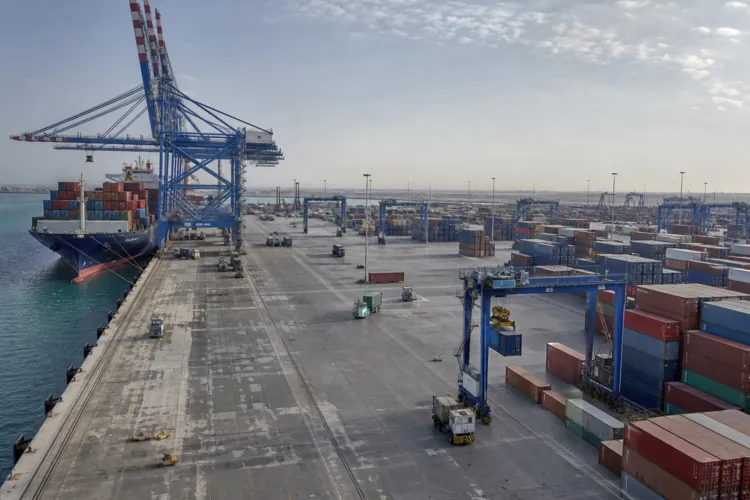
Automakers and their service partners are also looking for supply resilience and regional fit. MarkWide highlights how Valvoline leverages its blending facility network to secure bulk supply agreements with fleet maintenance companies, while Gulf Oil Middle East anchors its position through backward integration into base oil trading across Jebel Ali and Dammam ports. These details matter because port-side storage and blending capacity expansion in Jebel Ali and Dammam is reducing lead times for bulk lubricant procurement by independent service centers. Demand concentration also plays a role: the Dubai–Abu Dhabi freight corridor generates concentrated demand from high-utilization commercial truck pools that require scheduled preventive maintenance at shortened intervals. Suppliers that can service quick service centers for passenger cars while meeting fleet maintenance companies’ multi-vehicle lubrication schedules can access superior contract value.
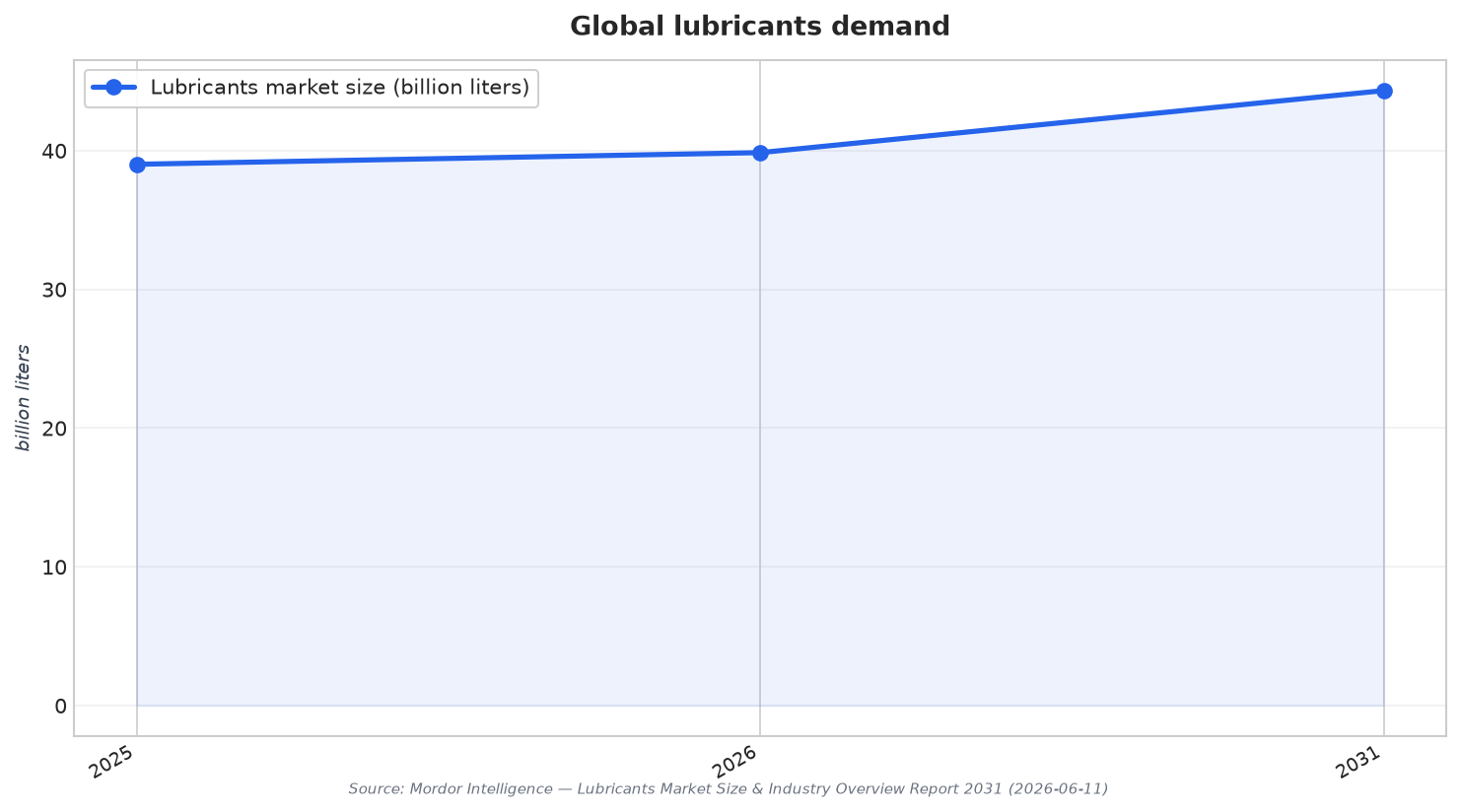
Product strategy is shifting toward synthetics and thinner viscosity grades, and global market signals reinforce that direction. Mordor Intelligence estimates the global lubricants market at 39.86 billion liters in 2026, rising to 44.33 billion liters by 2031 at a 2.15% CAGR, with demand shifting from traditional mineral-oil grades toward higher-performance synthetics as regulations tighten and OEMs seek viscosity downgrades. In 2025, mineral-oil products accounted for 65.85% of global lubricant market size, while Group I held 42.15% share; however, Group III synthetics are on track for the fastest 2.98% CAGR through 2031. For OEM service-fill lubricants in the GCC, this global trend supports a local expectation: suppliers must be ready to stock and service modern synthetic specifications rather than relying on legacy mineral-volume economics.
Finally, sustainability and documentation are moving into contract scoring. Mordor’s automotive lubricants analysis notes Shell launched carbon-neutral variants certified under ISO 14067, and TotalEnergies released Quartz EV3R and Rubia EV3R lubricants derived from regenerated base oils, securing OEM approvals and aligning with circular-economy targets. It also states that as sustainability metrics become procurement criteria, players with lifecycle-assessment capabilities will win enterprise fleets and government contracts. In the GCC context, MarkWide flags that stakeholders must monitor how carbon intensity disclosures under evolving Gulf environmental frameworks reshape procurement criteria for state-linked fleet operators. Put together, today’s winning bid pairs certified performance (API SP, ILSAC GF-6) with credible supply-chain execution and auditable sustainability proof, not marketing claims.
What are automakers in the GCC prioritizing when selecting service-fill lubricant suppliers?
Which standards and regulators most affect service-fill lubricant eligibility in Saudi Arabia and the UAE?
How do logistics and infrastructure influence OEM-aligned service-fill programs in the GCC?
Why are synthetics becoming more central to service-fill strategies, including OEM service fill lubricants in the GCC?
What global market signals support premiumization in automotive lubricants?